
Astatotilapia sp. "35"
Haplochromis Tomato
Synonyms: Haplochromis sp. "35", Haplochromis sp. "tomato"
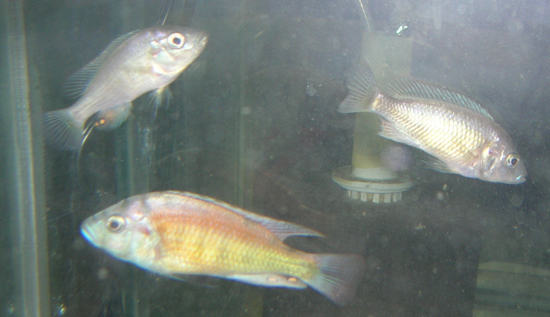
Above: A group of Haplochromis sp. "44". Photo by Sue Ewald.
Meaning of Name:
Genus- Astuto= cunning (Latin), tilapia= fish (Native African).aploos= simple (Greek), chromis= a fish, perhaps a perch (Greek).
Intro:
Astatotilapia sp. "35" is an undescribed Victorian Cichlid. In the Future it may be placed in the genus Astatotilapia. Astatotilapia sp."35" is also known as Haplochromis sp. "Tomato" because the male has a tomato red hue to his sides.
Distribution:
Astatotilapia sp. "35" is found in the rocky parts of Lake Victoria.
Size, Maturity, and Sexual Dimorphism:
Size: Males- 5 inches, Females- 3.5 inches
Maturity: 2 inches
Sexual Dimorphism: Males are larger and have color compared to the brown/silver females.
Care:
This fish was easy to care for. The only problem I had was that males are very aggressive towards females and other fish. They beat up many mbuna that I kept them with. For an adult trio, I would recommend a mixed tank no smaller than a 55 gallon.*Note*- Be cautious when mixing Victorians to prevent hybridization.
Diet:
Astatotilapia sp."35" is an insectivore in the wild. Feeding them is not difficult as they will accept almost any flake or pellet foods.Breeding:
The fish were easy to spawn once the females were conditioned. Conditioning the females was tough, and took a while. You don't need to do anything special, but it takes about a month. During conditioning, check on how aggressive your male is. Male Astatotilapia sp. "35" can tear up females during this time.Spawning takes place typical of Victorian cichlids, but the male is relentless towards any other fish in the spawning territory, so watch out. The fry were easy to raise, and were plentiful, about 35-50 per spawn.
Conclusion:
Astatotilapia sp. "35" is very similar to most Victorians in looks, but in behavior it was one of the more aggressive Victorians I've kept. This fish is not one you would see at a pet shop, and will probably have trouble finding among hobbyists.